
 German black/thrash/heavy metal trio Witching Hour return for your soul, eight long years since their last outburst ...and Silent Grief Shadows the Passing Moon. Alongside contemporaries like Nocturnal, Cruel Force, and Manzer, Witching Hour’s recent output has been well-received by critics and audiences alike. This puts the upcoming Decending… Where Time Has Ceased to Exist, Witching Hour’s fourth release in 20 years, in a prime position to compete well in its field. Will Descent… lead to greatness or will Witching Hour fumble the landing?
In some ways, they’ve threatened both. Witching Hour are an incredibly talented bunch, deftly straddling fences between black metal char, heavy metal righteousness, and thrash metal vitriol. Descending…’s warm and natural tones enhance these qualities, presenting a product that is easy on the ear while deadly to the spine. Songs build around long-form structures, with the shortest cut measuring over six minutes (not counting the fluffy instrumental intro), but overall runtime slots in at a tight 43 minutes. This makes repeat listens easy to approach. Sounds like everything is in place to secure a high score on the board, right?
Unfortunately, the songwriting lets Descending… down. Witching Hour’s latest epic suffers the same flaw as its predecessor: a lack of compositional dynamics and an overabundance of recycled parts. Each song taken out of the whole makes a compelling case. “Where Time Has Ceased to Exist” sets the bar quite high for the rest of the record, churning with a heavy metal swagger and roaring with spirit through epic leads, scorching tremolos, and thrashy switch-ups. Similarly, “Profane Resurrection of a Presumed Dead” hooks its claws into the brain with an insidious chorus bark and fiery guitar and percussion work. However, when unified as a whole, it’s all too easy to interchange phrases and measures between songs without fragmenting the experience. I can place my mark on two opposite sides—and stick a couple more pins in the center—and the same riffing motif, similar leads and flourishes, suspiciously familiar vocal runs, and the exact same bass-snare alternation greet me.
 Doubly damning, epic 11-minute closer “…and Then Came the Flames” showcases all of these issues in a microcosm, establishing a concise summary of everything heard thus far. And just like the others, taken out of the album context, the song rocks. Reminiscent of the same kind of grand, hellish adventure that Bütcher so gloriously captures on 666 Goats Carry My Chariot, “…and Then Came the Flames” feels complete, exciting, and wild, at least at first. As the track progresses, recycled parts and pieces cheapen the experience until I’m desperate to jump off the boat as it reaches shore. This mirrors my experience with the album as a whole. Fun and entertaining in the initial throes, it becomes a slog to get through in remarkably short order. By the time the closer wraps up, I’ve heard multiple iterations of the same ideas, spliced and arranged to deceive me into believing, if only for a moment, that I could pick any of these songs (minus the opener proper) out of a lineup without a cheat sheet.
Confounding as it is, Witching Hour represents a clash between having great ideas and writing songs that don’t adequately support or develop them. Instead, Descending… drops their best work into a sea of repetitive structures and monotonous bloat in the hopes that observers might then discern and appreciate them. With at least a half dozen spins under my belt at the time of writing, I did indeed find worthy gems to take home—and when isolated from the collection, those gems really sparkle. However, those rewards don’t quite justify the expanse of fluff and drag that bog Descending… down. In another world where Witching Hour invoked a greater variety of techniques, tempos, and textures to fortify their compositions and bring reliability to excitement, this record would’ve been a barnburner. As it is, it never truly catches fire, and leaves me wanting.
Rating: Disappointing…
DR: 8 | Format Reviewed: 320 kb/s mp3
Label: Dying Victims Productions
Websites: Bandcamp | Facebook
Releases Worldwide: May 22nd, 2026


 When one thinks of Long Island, stoner doom may not be the first musical variant that comes to mind. Restless Spirit have been out to change that since 2015, dropping several EPs and 3 long players of massive, weighty music with toes in the pools frequented by Mastodon, C.O.C., and The Sword. 2023s Afterimage was a great album crushed beneath a disastrous production that made enjoyment nigh impossible. Now comes their self-titled 4th album and a bit of a course correction. It’s a lighter, more rocking effort with a sense of brightness and wistfulness embedded in the burly, beefy sound. It’s still something entirely well-suited for a biker bar, but what Restless Spirit does is put them in the same ballpark as acts like Clutch, Fireball Ministry, and Freedom Hawk, and just in time for summer sun and outdoor beer drinking. How could that be a bad thing?

 I’ve gone back and forth about how to introduce The Ghost of a Future Dead, the eighth full-length by legendary Swedish death metal innovators At The Gates, the first with the returning Anders Björler back on lead guitar and songwriting duties (along with his twin brother, bassist Jonas) and also the final album featuring the late, great Tomas “Tompa” Lindberg, who sadly succumbed to a rare-but-super-aggressive bout of cancer in September of 2025. This introductory paragraph (and review) has been typed, deleted, reworded, deleted, approached differently, deleted, etc. so many times that I’ve lost count and given myself a colossal migraine in overthinking, over-evaluating, and over-justifying. But there comes a point where, in my month of listening to this, you have to say “fuck it,” and proceed in the direction that your gut, heart, and ears are guiding you towards. I will simply state that The Ghost of a Future Dead is many things.

 At first blush, pop music and progressive rock might seem too contradictory to be combined effectively. While the former prioritizes immediate accessibility, the latter prizes unconventional artistic expression. Even so, several Norwegian bands are finding immensely original ways to reconcile these differences.
![Moron Police - Pachinko [Things you Might have Missed 2025] | Angry Metal Guy](https://www.angrymetalguy.com/wp-content/uploads/2025/12/a2772970021_10.jpg)
 We get a lot of bold claims in the promo pit. It’s understandable; writing advertisements for music sounds like a thankless task, and no one is going to submit an album telling us that it’s a smidgen above mediocrity.

 Seven Metal Sins are a new act from France dedicated to the classic 80s heavy metal sound made famous by Accept and Gravedigger. On their Legacy of Chaos debut, they bring a ton of retro enthusiasm to the table, trying their level best to cobble together an album’s worth of headbanging, fist-pumping metal with loads of macho machismo and every traditional metal trope imaginable. The closest comparison is Gravedigger, as Seven Metal Sins base their sound around big, beefy riffs and warbling, semi-harsh vocals. This makes the material on Legacy of Chaos sit somewhere between Gravedigger classics like Excalibur and especially Rheingold. That’s a fine place to aim for, but unfortunately, it’s not so easy to stick the landing and come up equal to those particular platters. It also leaves those who attempt it exposed to sounding like an earnest but watered-down copy of the original. And in the worst-case scenario, a mere copy of a copy. Can Seven Metal Sins avoid these lethal pitfalls?


 Black metal veterans Hecate Enthroned have spent decades trying to step out of Cradle of Filth’s shadow—and not without reason. The two are widely credited with helping shape the UK black metal scene, sharing close stylistic similarities and even swapping a member or two at various points. In the late ’90s, they were nearly as inseparable as a pair of sultry vampiric twins until Cradle of Filth’s theatrical bombast launched them into the mainstream, landing their merch in Hot Topic stores and on the backs of angsty teenagers everywhere. Meanwhile, Hecate Enthroned remained largely underground. Over the course of six albums, they’ve largely stayed true to their sound, and while consistent, their discography has often felt average. 2019’s

 When last we visited the
 One of the paradoxes of living in a large city is the tendency of its inhabitants to feel isolated despite being surrounded by millions of people. Something of a “water, water, everywhere but not a drop to drink” phenomenon. It seems—at least to me—that this theme frequently surfaces within the post-black metal subgenre. Callous Faulter was founded by J. Angus in Melbourne, Australia, in order to give sonic form to urban loneliness. Their mission statement is succinct and straightforward: “Modern life is hell and Callous Faulter provide the soundtrack.” And considering that this is a debut record, Callous Faulter is quite a potent soundtrack indeed.
 However, Callous Faulter doesn’t always make the most of its lean runtime, particularly during the second track. “Ocean Views” begins promisingly with an energetic intro reminiscent of
 In my continuing exploration of
 Since opining on thrash metal’s 2026 resurgence in Nukem’s

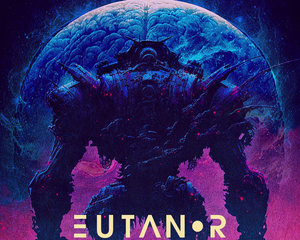
 In a time where one side-eyes many an image or video online for fear of its having been created with generative AI, it’s bemusing when an artist actively markets themselves as robotic. Calling themselves a “real-fiction metal band,” centering the project on the transmissions of powerful, hyper-intelligent cyborgs, and initially appearing to have zero discoverable human presence on the internet, Polish act Eutanor might have gone a little too far with the gimmick. They are, as it turns out, so extremely far underground that neither Metal Archives, nor Bandcamp, nor any streaming service will offer you their music.

 So, what’s happening here is Australian symphonic metalers Ana and their debut record, Motivated by Death are set on pioneering a new sub-sub-genre. “Couture metal.” For the blue-jeans-and-band-tees wearers among us, couture fashion is all about expressive, customized statements in clothing, often expensive and always personalized. This is an evident visual influence for Ana, and musically the band cites their style as “a sophisticated, upscale evolution of the craft that prioritizes high-fashion theatricality alongside punishing sonic precision.” Fewer corsets, more spandex. One thing’s for sure, Ana have bought into themselves: they have a
 Cards on the table—this review is late. Really late. We got the promo, but it went unclaimed, and it wasn’t until I picked up Lynx’s Trinity of Suns for personal enjoyment that I listened. Before I finished my first spin, I knew I had to Filter it. And that’s exactly what I did. I sat down to write my 200ish words about Lynx’s sophomore album, and the words spilled out. Too many, actually. I described how every subsequent journey through Trinity of Suns deepens my appreciation for Lynx’s retro rock, and soon I realized I had more to say than a limited word count would allow. Over the last month, Lynx has enraptured me with their sultry siren song, entrenching Trinity of Suns as a mainstay for commutes and chores. Rather than saving it as a Thing You Might Have Missed, though, I dared to write the counter-breaking missive I hoped my betters would permit. I begged. I cajoled. I cashed in the scant favors and political capital I’ve accrued since joining the staff to get this thing published. Was it worth it? If you’re reading these words, you’re damn right it was.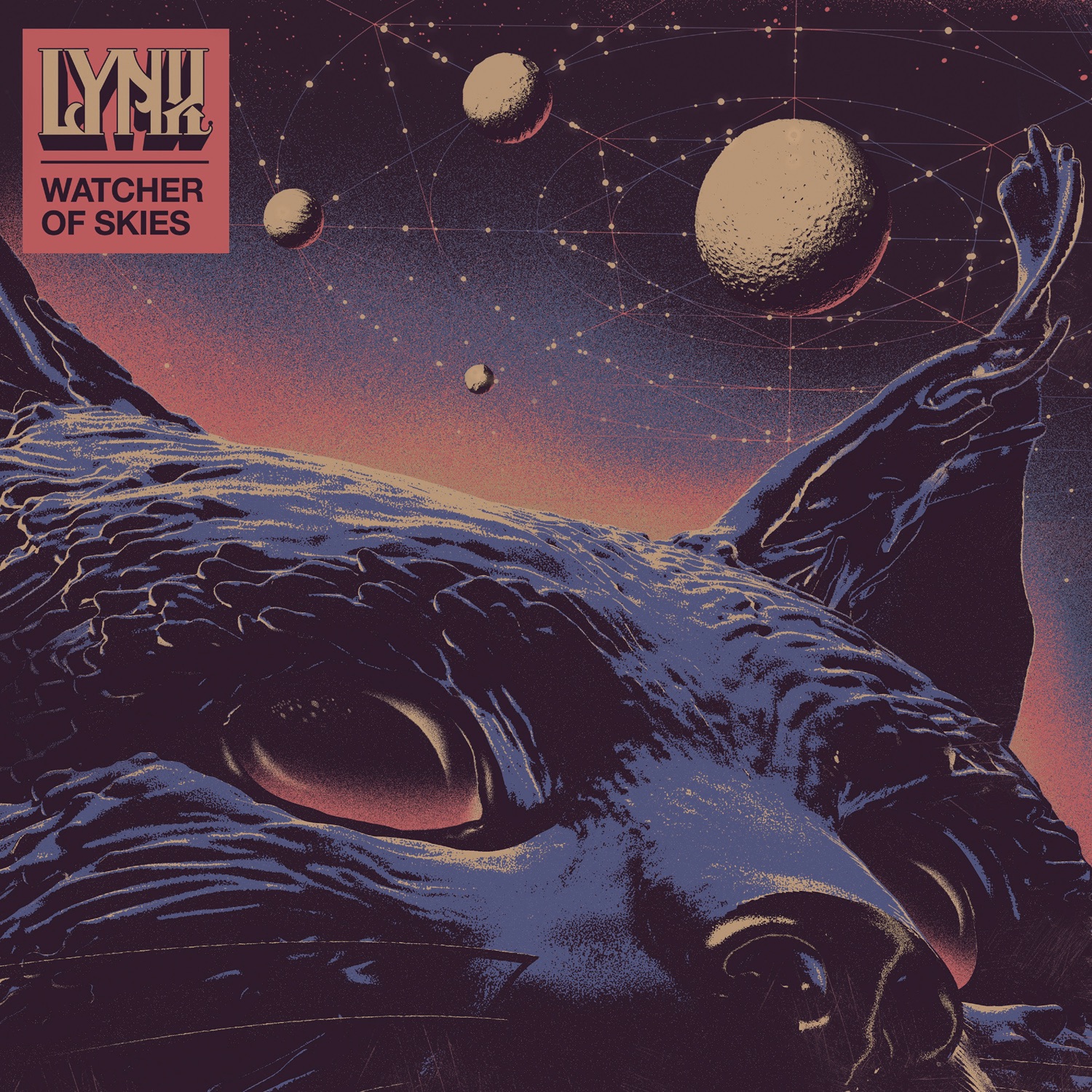
 Though my first published review here at Angry Metal Guy was back in September 2024, it was on May 30, 2025, that I officially escaped n00bdom with my review of Rivers of Nihil’s

 Now—as summer blasts the Earth into a fly-ridden heath—is when I long most for fall. So I get why Patrik Andersson Winberg’s (Dun Ringill, Doomdogs) new solo project Mirror of My Soul would debut this June with October Is Rising.
 Some things are acquired tastes—coffee, vegetables,